Spring 1935
My childhood friend Ollie Gory (later Ollie Hillman) was living in Toronto when I arrived from Kirkland Lake. We were in the midst of the Great Depression, known as the Dirty Thirties. Jobs were scarce. We were penniless and in desperate need of work.
We happened to hear that Aylmer’s were hiring people in their St. Davids, Ontario, canning factory, living quarters included.1 We pictured a beautiful, fully equipped, comfortable furnished room with cottage curtains.
With about a dollar between us, the only way we could get to St. Davids was to hitchhike. We packed a small heavy steamer trunk, including an iron, toaster, whisk, blanket and other necessities. When we closed the trunk, we could barely lift it. So, we put a rod through the handle, we each took an end and were on our way. We boarded a streetcar on College Street which took us directly to Dundas Street and Roncesvalles Avenue. Dundas was the old Highway 8 where we had decided to begin hitch hiking. When we got off the streetcar, the handle of the trunk broke in the middle of the intersection. We were in quite a predicament, unable to move it, so we stood there helpless, holding up traffic.
A kind policeman came over to see what was going on. He tried, but was not able to move the trunk. There was nothing to lift it by. He asked if we were carrying gold bricks. Then he went across the street to a Woolworth-type store and came back with some heavy rope, which he tied around the trunk. He carried it to the sidewalk put the rod through the rope and sent us on our way. With the rod secured, we each carried an end once again and walked a block to Highway 8 to continue our journey.
Neither of us worried about getting to the canning factory before dark, or that we might not even be hired. “Que sera, sera.”
It wasn’t too long before a young couple stopped their car to ask if we were really hitchhiking. I guess they had to know what two idiots were doing on a highway with a steamer trunk. They said St. Davids was on their route and offered to drive us to the canning factory. They stopped at a restaurant and invited us to join them. It was close to dinner time and we were hungry but didn’t want to impose any further, so we told them we were fine and would wait in the car.
When we arrived at our destination, Ollie told me the couple offered to give us $5.00 but she would only take it on the condition that it was to be a loan. She asked for their address and told me some time later that she repaid the couple and included a thank-you note. Most of our experiences are unforgettable but I don’t remember a thing about the loan.
It was dusk when we arrived at the factory. Someone sent us to a large shed filled with springs and mattresses. We were told to take what we needed to a smaller shed and make up our bed. So much for cottage curtains! The mattress was covered with bed bugs. Ollie brought out a whisk, one of the treasures she had packed. We tried unsuccessfully to whisk the bugs away. While we were whisking two women were leaning out their window talking in Ukrainian about how fussy we were. One woman said, “Those two won’t be around for long. Silk stockings yet!” They apparently didn’t know or would never have believed that we could be Ukrainian since they must have been under the illusion that Ukrainians came from hardy stock.
The walls of the shed were built with boards. Wide gaps between the boards let the cold air come through. Ollie, the practical traveler, had packed a blanket the only bedding we had. We were awake all night with the cold and eaten alive by bed bugs. One night was all we could take of freezing and scratching so, as soon as it was light, we got out of bed, packed the steamer trunk, and began hitchhiking again towards Niagara Falls hoping to find another job. We were probably miles away before the two women were awake.
We went as far as Stamford Centre,2 stopped at a gas station and explained our predicament to the attendant and asked if he knew where we could get work. The attendant had been chatting with a man by the name of Mr. Wilson who happened to be the proprietor of Uncle Tom’s Cabins. He suggested we keep working at Aylmer’s, stay in one of his cabins and, when the season opened, he would have work for us.
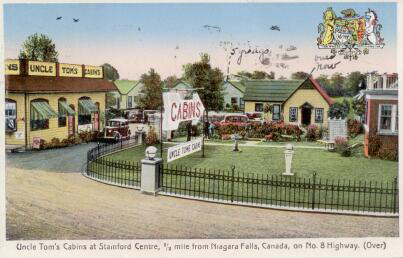
We worked at Aylmer’s factory three days a week, hitchhiking to work, canning asparagus; then back to Uncle Tom’s Cabins to our wonderful accommodations. The journey was approximately three miles each way and we thought we were in heaven.
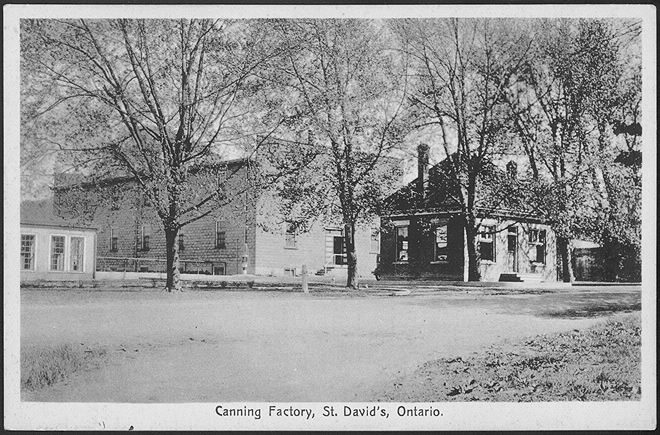
We had some change that Ollie kept in a jacket pocket hanging in the cannery on a hook nearby. When we finished for the day, she looked in her pocket: no money. We were penniless once again. When the employees were having their lunch on the lawn in front of the building, we went around the back so they wouldn’t know we didn’t have lunches. We asked our boss for a small advance on our salary to buy food but were flatly refused.
For four days each week we had no work. So, one week we hitchhiked to Toronto and raided my sister Olie’s cupboards. To this day I don’t know how she put up with us. Back we went to the canning factory and finished off three more days of work. At the end of the second week we received our wages: 19 cents an hour for six days. We were rich! So we quit our jobs and had dinner at a restaurant, with a side dish of asparagus.
When we went back to the cabin Mr. Wilson told us his old employees were all coming back, so he couldn’t employ us. But he seemed embarrassed, so we knew that wasn’t the reason. Ollie remembers that his wife and daughter were not too happy about two young women staying in one of their cabins free of charge. He wanted his family to meet us believing they would change their minds, but they weren’t interested. It was a small town and gossip was a problem,
Mr. Wilson went to the outskirts of Niagara Falls to McGibbons Inn on Stanley Avenue, a large tourist establishment, and found work for both of us. We were hired immediately and to this day I wonder if we ever let him know how grateful we were.
We had a very nice room in a house about a half a block away from McGibbons Inn. Excellent meals were included in their restaurant. I can’t remember what our wages were but satisfactory, I’m sure, and we loved our jobs.
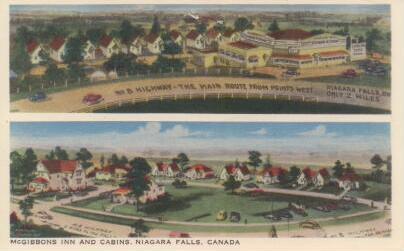
Ollie was a waitress and I helped a very nice lady with the laundry. Most of our work was outdoors which I loved. My job was hanging bedding, towels, etc., on clothes lines to dry, and folding all the linen on an outdoor table. I had normal working hours, but Ollie waited on tables, and since she worked the dinner hour, I was often in bed by the time she finished work. She sometimes came back with a coke after I was asleep and, wanting to talk, she would put the coke straw in my mouth to wake me.
An industrial company had a swimming pool near the cabins that the public was allowed to use. The area wasn’t populated so the pool was never crowded. We made friends with people who frequented the pool: our co-workers and our neighbours. We shopped in Niagara Falls, New York, occasionally. We would visit the fruit market and gorge on a variety of freshly picked fruit.
When the tourist season was over in the fall, we came back to Toronto and once again stayed with my wonderful, patient sister.
Next Chapter: Paramount Studios
1 St. Davids is a small community near Queenston, north of Niagara Falls. The St. Davids cannery, located on Four Mile Creek Road, was opened in 1896 and operated for 112 years before being closed in 2008. The cannery had several owners over the years including Aylmer’s. Return
2 Stamford Centre is a community about 5 km south of the St. Davids cannery. Return
3 The back of the postcard reads “No. 8 Highway – Stamford Centre – Just Outside Niagara Falls, Ont. – Running Water and Toilet in Every Cabin – Beds with Simmons Springs – Inner Spring Mattresses – Large Cool Rooms – In the Cool Evenings, Cabins Heated by Gas – Also Cabins for Light Housekeeping – Free Shower Bath – Free Cooking – Swings for Kids, Big or Little – Breakfast and Light Lunches – Free Parking – Apartments Arranged for Parties – Secure Your Room – Then View the Falls! F.K. Wilson and Sons. Ask to See Tom and Eva. Accomodation for 150 People. Telephone 751 – M, Niagara Falls, Ontario.” Return
4 Source: Toronto Public Library Return
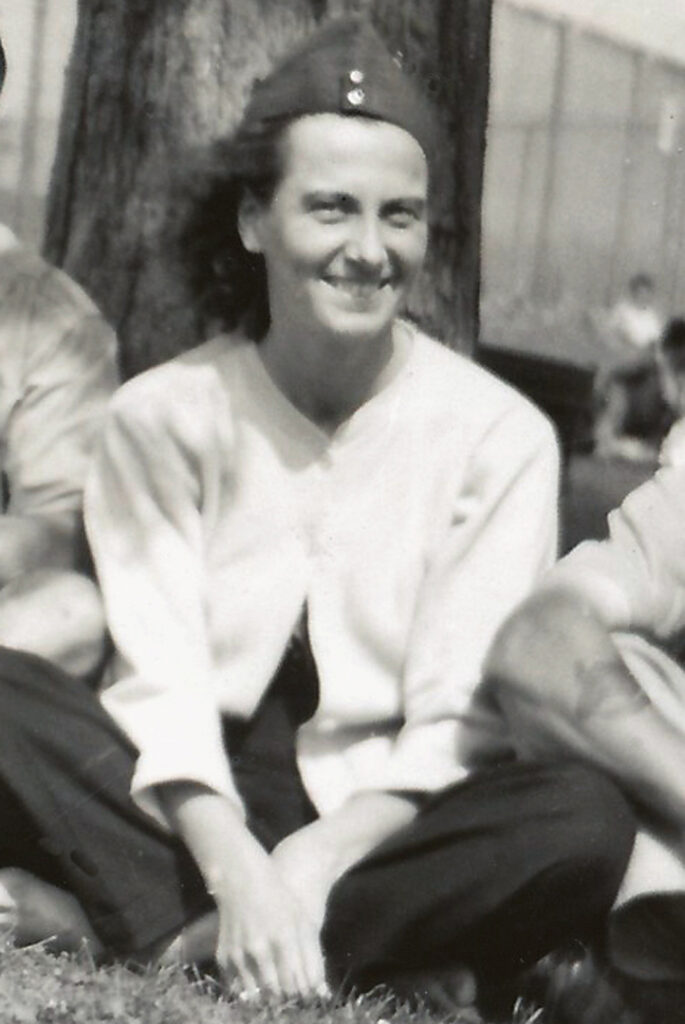
5 Angela also wrote on the back of this photo, “Ollie’s working hours interfered with pool hours; she missed the photo shoot.” Return